Virtual reality has changed how we play games and explore digital worlds in recent years. The Meta Quest 3 is currently the best VR headset for most people because it offers excellent features at a reasonable price point. If you’re thinking about jumping into VR, now is a great time with many options available for different needs and budgets.
Here are the latest developments in VR headsets:
🎮 New Headsets & Collaborations
- Nintendo has confirmed it’s actively researching VR, AR, and mixed reality technologies, signaling that a dedicated Nintendo VR headset could be in the works. This could place them in direct competition with the likes of the Quest 3 and PSVR 2.
- Meta and Microsoft have launched a new Meta Quest 3S Xbox Edition, priced at $399.99. This version bundles the headset with Xbox-themed controllers and a 3-month Game Pass Ultimate subscription, highlighting deeper integration with Xbox Cloud Gaming in virtual reality.
🧘 VR for Wellness
- Recent research shows that immersive VR forest-bathing experiences can significantly lower stress levels and boost mental well-being, presenting an intriguing virtual alternative to traditional nature therapy.
🛠️ VR in the Workplace
- The new Analogue 2 platform by Spatial is now available on Apple Vision Pro, offering powerful tools for immersive collaboration. It lets users visualize data, hold meetings, and co-create in full 3D environments—aimed at design teams and professionals.
🔋 New Accessories
- The KIWI K4 Duo is a newly released head strap for Meta Quest 3 and 3S. It includes built-in flip-out speakers and an extended battery pack, enhancing both comfort and playtime for VR users.
What This Means for You
- Gamers: The Quest 3S Xbox Edition offers an affordable and seamless way to access Xbox content in VR.
- Wellness seekers: Virtual forest experiences are proving to be a real option for stress reduction.
- Professionals: Apple Vision Pro and Spatial’s tools are pushing mixed reality deeper into enterprise collaboration.
- Everyday users: New accessories like the KIWI K4 Duo continue to improve comfort, battery life, and audio quality.
Finding the right VR headset means balancing cost, comfort, and features. Some headsets need a powerful computer to work, while others like the Quest 3 work all by themselves. Your choice depends on what you want to do in VR and how much money you’re willing to spend.
1. Meta Quest 3
The Meta Quest 3 is currently one of the best wireless VR headsets on the market. Released as the successor to the Quest 2, it brings several key improvements that make it stand out in the VR landscape.
This headset runs on the Snapdragon XR2 Gen 2 chip, which delivers double the GPU processing power compared to the Quest 2. This extra power means faster load times and smoother gameplay.
The visual experience on the Quest 3 is impressive with clear, crisp displays. Many users find the games and activities immersive and enjoyable, making it well worth the investment.
One big advantage of the Quest 3 is its fully wireless design. You don’t need a PC or external sensors to use it, though you can connect it to a computer for more demanding games if you want.
The Quest 3 also offers mixed reality capabilities, blending virtual elements with your real environment. This feature opens up new possibilities for games and applications beyond traditional VR experiences.
According to Reddit users, the Quest 3 is currently the best wireless VR system available, though competitors like the upcoming Pico 5 may challenge this position in the future.
The headset comes in different storage options, with the 128GB model being the most affordable entry point. For those who plan to download many games, the larger storage option might be worth considering.
Battery life remains a limitation for most VR headsets, and the Quest 3 is no exception. Users typically get 2-3 hours of gameplay before needing to recharge.
The Quest 3 has access to Meta’s extensive library of VR content, which is a significant advantage over some competing headsets. This includes popular titles and exclusive releases.
For those considering alternatives, Meta recently released the Quest 3S, which uses the same chipset and RAM as the Quest 3. The main differences come down to display quality and price point.
2. Bigscreen Beyond
The Bigscreen Beyond is often called the world’s smallest VR headset. It weighs just 127 grams, making it incredibly lightweight compared to other headsets on the market.
What makes this headset special is its custom-fitted design. Each Beyond headset is tailored to the user’s face shape, creating a more comfortable fit for long gaming or viewing sessions.
The display quality is impressive with ultra-high resolution Micro-OLED screens. Each eye gets 2560 x 2560 pixels, providing sharp visuals and excellent clarity from edge to edge.
One of the Beyond’s standout features is its OLED technology which delivers perfect blacks and no god rays. This creates a more immersive experience without the light artifacts common in other headsets.
The Beyond uses custom pancake optics which help keep the form factor small while maintaining visual quality. This optical design contributes to the headset’s compact size without sacrificing performance.
For tracking, the Beyond utilizes SteamVR tracking. This allows for precise movement detection and compatibility with a wide range of VR games and applications.
Sim racing enthusiasts might find the Beyond particularly appealing. Its revolutionary ergonomics and lightweight design make it comfortable for extended racing sessions.
While the Beyond offers many advantages, it’s worth noting that some reviews mention issues with the headset. No technology is perfect, and potential buyers should consider both pros and cons.
The custom fitting process requires users to scan their face using a smartphone app. This extra step ensures a tailored fit but adds complexity to the purchasing process.
For PC VR users who value comfort and visual quality, the Beyond presents an interesting option. Its focus on reducing weight while maximizing display quality addresses common complaints about bulky VR headsets.
The Beyond connects to PCs rather than working as a standalone unit. This means users need a capable gaming computer to power their VR experiences.
3. Pimax Crystal
The Pimax Crystal stands out in the VR market with its cutting-edge glass aspheric lenses, offering what many users describe as an ultra-clear virtual reality experience.
What makes this headset special is its impressive resolution. The Crystal features 2880 x 2880 pixels per eye, making it one of the highest resolution VR headsets available to mainstream consumers today.
The visual quality shines particularly in simulation games. Many users find the Crystal perfect for flight simulators, racing games, and other detail-heavy applications where seeing small text and distant objects clearly matters.
Another key feature is its built-in eye tracking. This technology allows for foveated rendering, which boosts performance by focusing processing power on whatever the user is looking at directly.
The Crystal uses QLED displays that produce stunning visual quality. Colors appear vibrant, blacks look deeper, and the overall image clarity exceeds many competing headsets.
However, the Crystal isn’t perfect. Users frequently mention that the software experience lags behind the hardware quality. Setup can be complicated, and the user interface isn’t as polished as some competitors.
Long-term reviews show the Crystal holds up well over time. After six months of regular use, many owners still rate it highly for visual fidelity, especially for simulation enthusiasts.
The headset isn’t ideal for casual users. Its setup process and software quirks make it less suitable for quick, pick-up-and-play sessions compared to more user-friendly options like the Quest series.
For serious VR enthusiasts, particularly those who value visual quality above all else, the Crystal represents a top-tier option despite its software limitations.
Price is another consideration. The Crystal sits in the premium segment of the market, making it an investment rather than a casual purchase for most consumers.
4. Apple Vision Pro
Apple Vision Pro is Apple’s first spatial computer that blends digital content with your physical space. It uses revolutionary technology to create a seamless mixed reality experience unlike any other headset on the market.
The visual quality of the Vision Pro stands out immediately. Users report that its passthrough cameras deliver incredibly clear and sharp images of the real world. This makes mixed reality applications feel much more natural than on competing devices.
Hand and gesture tracking on the Vision Pro is exceptional. The system can detect subtle finger movements and facial expressions, allowing for intuitive control without controllers. This creates a more immersive experience when interacting with digital content.
For entertainment, the Vision Pro shines. It’s described as stunning for watching videos and films, offering a theater-like experience in any room. The spatial audio adds to this immersion, making you feel like you’re truly in another place.
The headset also works well for productivity tasks. It’s considered the best VR/AR headset for laptop-style 2D work, letting users set up multiple virtual screens around them. This makes it useful beyond just gaming and entertainment.
Despite these strengths, the Vision Pro has some drawbacks. Its high price point puts it out of reach for many consumers. The weight of the device can also cause discomfort during longer sessions.
Some users report that while they love the technology, they use it less frequently than expected. The headset’s form factor, while revolutionary, might still be too bulky for everyday use.
Battery life is another consideration. The external battery pack gives you freedom of movement but adds another component to manage during use.
The Apple Vision Pro represents an impressive technological achievement. It shows what’s possible when cutting-edge hardware meets thoughtful software design. After over 60 days of use, many users still find it the most impressive extended reality headset they’ve tried.
When compared to more affordable options like the Meta Quest 3, the Vision Pro offers superior visual fidelity and tracking. However, the Quest 3 has a larger library of games and apps at a fraction of the price.
The Vision Pro represents a big leap forward for spatial computing, even if its current form isn’t perfect. As the technology matures and becomes more affordable, we’ll likely see these features become more mainstream.
5. Sony PlayStation VR2
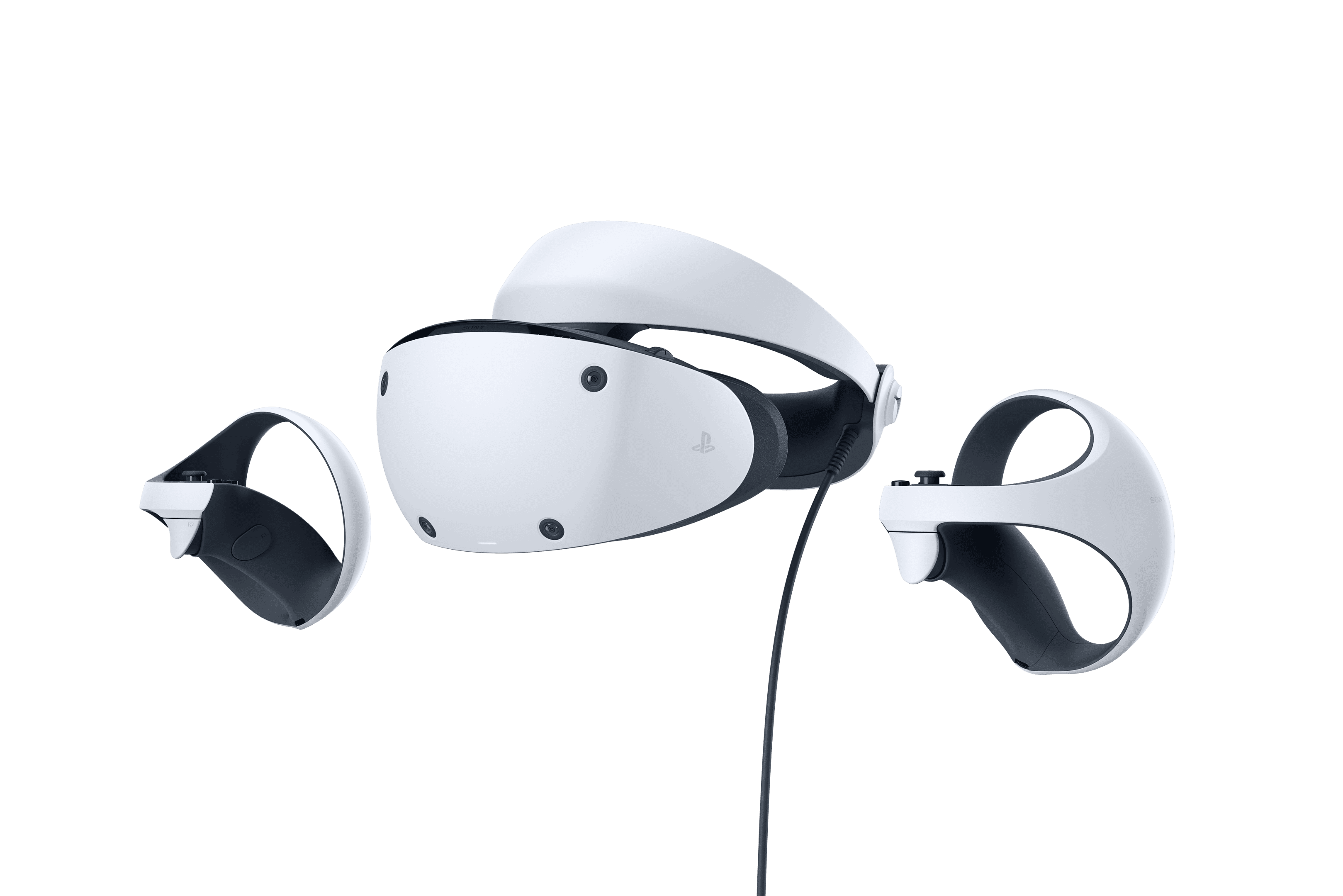
The PlayStation VR2 is Sony’s latest virtual reality headset designed exclusively for PS5 consoles. It offers stunning visuals and realistic audio that take gaming to new heights.
What sets the PSVR2 apart is its impressive specs. The headset features OLED displays with 2000×2040 resolution per eye and supports HDR content. This means games look crisp and colorful, with deep blacks that make virtual worlds feel more real.
The PSVR2 includes innovative features like eye tracking technology. This allows the headset to detect the motion of your eyes, creating more natural interactions and enhancing emotional responses in games.
Comfort was clearly a priority in the design. The headset is well-balanced and includes an adjustable headband. Many users can play for hours without the discomfort that plagues other VR systems.
The controllers deserve special mention. Called PS VR2 Sense controllers, they include adaptive triggers and haptic feedback similar to the DualSense controllers. This creates a tactile experience that makes virtual objects feel almost real.
Some users consider the PSVR2 the best headset for realism and immersion, noting how quickly it can transport players to another world. The combination of high-resolution displays, 3D audio, and haptic feedback creates truly memorable gaming moments.
The PSVR2 also includes subtle headset vibrations as part of its immersive technology package. These small details add up to create a more complete sensory experience.
Game selection continues to grow, with titles like Horizon Call of the Mountain and Resident Evil Village showcasing what the hardware can do. Many games take full advantage of the eye tracking and haptic feedback to create new types of interactions.
The main drawback is that the PSVR2 only works with PS5 consoles. Unlike standalone headsets, you must own Sony’s latest console to use it. The price point also runs higher than some competitors when you factor in the required PS5.
Cable management is simpler than the original PSVR, requiring just one USB-C connection. This makes setup quicker and reduces tangling during play sessions.
6. Valve Index VR Kit
The Valve Index VR Kit remains a top contender in the VR market despite newer competitors. Released by Valve Corporation, this premium headset offers impressive features for VR enthusiasts.
The headset runs at 120Hz with backward compatibility to 90Hz and even has an experimental 144Hz mode. These higher framerates help create a more realistic VR experience for users, reducing motion sickness for many players.
Many VR fans consider the Valve Index the best kit for enthusiast VR experiences. While it comes with a steep price tag of $999, most users feel they get their money’s worth through superior performance.
The controllers are a standout feature of the Index. They track individual finger movements, creating a more natural way to interact with virtual objects. This finger tracking technology sets the Index apart from many competing headsets.
Comfort is another strong point for the Index. It features adjustable head straps and balanced weight distribution, making it suitable for longer VR sessions. The off-ear speakers provide quality audio without pressing against your ears.
The full Valve Index VR Kit includes the headset, two base stations, and the specialized controllers. It also comes with Half-Life: Alyx, a game designed to showcase the system’s capabilities.
Setup requires some technical know-how. The base stations need proper mounting for accurate tracking, and you’ll need a powerful PC to run games at the highest settings. The headset connects to your computer through a cable, which limits mobility compared to wireless options.
Despite being older than some competitors, the Index still ranks among the best VR headsets in 2025. Its build quality and performance help it stay relevant in a rapidly changing market.
The Index requires a PC connection and isn’t standalone like the Meta Quest series. This may be a drawback for casual users but provides better graphics and performance for dedicated VR enthusiasts.
Customer feedback for the Index remains largely positive. Many users report that even after trying newer headsets, they still prefer their Index for immersive VR gaming and experiences.
7. HTC Vive Pro 2
The HTC Vive Pro 2 stands out in the VR market with its impressive display capabilities. It features a high-resolution screen that delivers crisp visuals for an immersive experience. Users can enjoy next-level graphics that make games and applications look more realistic.
This headset offers a wider 120° field of view, allowing users to see more of the virtual world at once. The expanded view helps make the VR experience feel more natural and less like looking through a window.
Motion tracking on the Vive Pro 2 works extremely well. The excellent tracking system helps maintain immersion by accurately following your movements in real-time. This precision is crucial for gaming and professional applications alike.
The headset comes with built-in headphones that provide decent audio quality. While the audio is acceptable for a good VR experience, some users might prefer using their own headphones for the best sound.
People who wear glasses will appreciate the Vive Pro 2’s design. It offers better glasses compatibility than many competing headsets, making it more comfortable for those who need corrective lenses.
The full kit version includes the headset, base stations, and controllers. This complete package gives users everything needed to jump into VR gaming right away. The base stations help with tracking, while the controllers allow for natural interaction with virtual objects.
HTC designed this headset for both business users and serious VR enthusiasts. Its high-end specifications make it suitable for professional applications as well as gaming. However, this quality comes with a higher price tag than more casual VR options.
The build quality feels solid, with comfortable padding that helps during longer VR sessions. The adjustable head strap distributes weight evenly, reducing neck strain during extended use.
Setting up the Vive Pro 2 requires some space and preparation. The base stations need to be mounted in opposite corners of your play area for optimal tracking performance. Once set up properly, the system provides a reliable VR experience.
8. Somnium VR1
The Somnium VR1 stands out as a high-end PCVR headset made for serious VR enthusiasts and simulator fans. It features impressive 2880×2880 QLED displays with a sharp 35 PPD (pixels per degree) resolution.
One of the VR1’s strongest points is its wide field of view. The standard model offers 130° horizontal and 105° vertical FOV, while the Ultimate Edition boasts an even wider 170°x170° view. This makes games and simulations feel more immersive with less of the “looking through binoculars” effect.
The headset uses dual aspheric lenses to deliver clear visuals across the display. Users can choose between refresh rates of 72Hz, 90Hz, and 120Hz, with an experimental 144Hz mode for ultra-smooth motion.
Display quality gets a boost from local dimming technology and high brightness levels. This helps create better contrast in dark scenes and makes colors pop more vividly than many competing headsets.
The VR1 comes in different editions, including options for hand tracking, eye tracking, and mixed reality. These premium features add to the already steep price tag, positioning this as a luxury option in the VR market.
Long-term users note both strengths and weaknesses. In a 9-month review, testers highlighted that while the visual quality is excellent, potential buyers should weigh whether the additional cost over mainstream headsets is justified for their specific needs.
Some reviewers have mentioned an odd lens issue with the VR1. While the field of view is impressive, this quirk might be noticeable to some users during gameplay.
The Somnium VR1 is particularly well-suited for simulator enthusiasts. Flight sim, racing, and space sim players will appreciate the sharp visuals that make instrument panels and distant objects more readable.
As a tethered PC VR headset, the VR1 requires a powerful gaming computer. This adds to the overall investment but delivers premium visual quality that standalone headsets can’t match.
9. Varjo XR-4
The Varjo XR-4 stands out as a premium mixed reality headset designed primarily for professionals. It features what are claimed to be the highest-resolution mixed reality headset displays ever made. This Finnish-made device pushes the boundaries of visual clarity in the VR/MR space.
With 28 million pixels across its displays, the XR-4 delivers exceptional visual quality. The custom full-dome aspheric lenses help showcase these pixels across a field of view that’s 50% larger than its predecessor, the XR-3. This expanded view creates a more immersive experience.
Comfort is addressed through a hybrid halo strap design. This clever setup shifts most of the weight to your forehead while providing thick padding on top and rear sections. Such design choices help during longer usage sessions.
The XR-4’s visuals are backed by industrial-grade color accuracy and 200 nits of brightness. It also includes full array local dimming technology, which enhances contrast in virtual environments. These features contribute to its photorealistic visual quality.
User experiences with the XR-4 have been mixed for gaming purposes. While it has good build quality and excellent speakers (reportedly better than the HP Reverb G2), some users find it doesn’t fully live up to expectations for PC VR gaming. The horizontal field of view reaches beyond 110 degrees with 100 degrees vertical.
The passthrough quality, which allows users to see the real world while wearing the headset, has received some criticism. Despite the headset’s otherwise impressive specs, this feature hasn’t matched the high bar set by its other capabilities.
Varjo positions this device as delivering the most immersive mixed reality experience ever constructed. While that’s a bold claim, the technical specifications do support the notion that this is a cutting-edge device.
Price remains a significant consideration with the XR-4. As a professional-focused device, it comes with a premium price tag that puts it out of reach for most casual VR enthusiasts. This headset clearly targets enterprise users, researchers, and specialized professionals rather than the general consumer market.
10. Meta Quest 3S
The Meta Quest 3S is a standout option in the VR market, offering a balance of performance and value. Released as a more affordable alternative to the Quest 3, it doesn’t sacrifice much in terms of user experience.
This headset features the same mixed reality experience as Quest 3, with 4.5 times the resolution and color compared to Quest 2. This means you’ll enjoy crisp visuals that make games and apps more immersive.
Under the hood, the Quest 3S uses the same chipset and RAM as the Quest 3, allowing it to run all the same VR games and applications. You won’t miss out on content by choosing the more budget-friendly option.
The fit is comfortable for most users, making longer VR sessions more enjoyable. Combined with its fast chip and great controllers, the Quest 3S offers a surprisingly premium experience at a lower price point.
One of the biggest advantages of the Quest 3S is access to Meta’s extensive game library. With years of content development behind it, new users will find plenty to explore right away.
Many users consider the Quest 3S one of the best VR programs available, especially when considering the price-to-performance ratio. It hits a sweet spot for newcomers to VR who want quality without breaking the bank.
The standalone nature of the Quest 3S means you won’t need a powerful gaming PC to enjoy VR. Just put it on and you’re ready to go, which makes VR more accessible to a wider audience.
Battery life is decent, though intensive gaming sessions will drain it faster. Keep a charging cable handy for longer play sessions.
For those comparing it with the full Quest 3, the main differences are subtle but might matter to serious enthusiasts. The Quest 3 offers double the GPU processing power compared to Quest 2, while the 3S brings many of those benefits at a lower cost.
The Guardian calls it the best bang for your buck in VR, which sums up the Quest 3S perfectly. It delivers where it counts without unnecessary frills that drive up the price.
Understanding VR Technology
Virtual reality technology transports users to digital worlds through specialized hardware and software. VR creates immersive experiences that trick our senses into believing we’re somewhere else.
Key Components of VR Headsets
The display is perhaps the most critical component of any VR headset. Modern VR headsets like the Meta Quest 3 feature high-resolution screens for each eye, creating a 3D effect.
Motion tracking sensors monitor head movements and translate them into the virtual world. This technology includes gyroscopes, accelerometers, and sometimes external sensors or cameras.
Controllers let users interact with virtual objects. Some advanced systems also offer hand tracking for controller-free experiences.
Audio plays a huge role too. Most headsets include built-in spatial audio systems that make sounds appear to come from specific directions in the virtual space.
The processor handles all the complex calculations needed for VR. Standalone headsets like the Quest 3S have built-in computing power, while others connect to PCs or consoles.
How VR Enhances User Experience
VR creates a sense of presence – the feeling of actually being in another place. This happens when the technology successfully tricks multiple senses at once.
The immersive nature of VR makes games more exciting. When you physically duck behind cover in a shooting game, the experience feels much more real than pressing a button.
VR isn’t just for gaming though. It’s becoming valuable for training and education. Medical students can practice surgeries, and employees can learn dangerous tasks without real-world risks.
The technology also connects people in new ways. Friends can meet in virtual spaces and interact almost as if they were physically together, regardless of their actual locations.
With each new generation, like the HTC Vive Pro 2, headsets get lighter and more comfortable, allowing for longer, more enjoyable sessions.
Features to Consider in a VR Headset
When shopping for a VR headset, several key factors will determine your experience. The right combination of display quality and comfortable design can make all the difference between an immersive adventure and a disappointing gadget.
Display Quality and Resolution
The display is perhaps the most critical aspect of any VR headset. Higher resolution displays provide clearer, more detailed visuals that help create believable virtual worlds. The best headsets on the market now offer impressive specs like 4896 x 2448 pixels per eye.
Refresh rate matters too. A good rate prevents motion sickness and creates smoother experiences. While 90 Hz is standard for most headsets, aiming for 120 Hz or higher will give you better results, especially for fast-paced games.
Field of view (FOV) determines how much of the virtual world you can see at once. Wider FOV creates a more natural, immersive experience by reducing the “looking through binoculars” effect that plagues cheaper headsets.
Don’t forget about lens quality! Good lenses minimize distortion at the edges of your vision and reduce the screen-door effect (where you can see the gaps between pixels).
Comfort and Ergonomics
Even the most amazing display won’t matter if your headset hurts to wear. Weight distribution is crucial – top-heavy headsets can cause neck strain during longer sessions.
Look for these comfort features:
- Adjustable head straps
- Cushioned face padding
- Weight under 600g if possible
- Proper ventilation to prevent fogging
The Meta Quest 3 balances comfort with performance well, making it a popular choice. Some premium headsets include counterweights at the back to better distribute weight around your head.
Consider how the headset accommodates glasses if you wear them. Some models have adjustable lens distance or special face cushions designed for glasses wearers.
Battery life matters too for wireless headsets. Most give 2-3 hours of playtime, but some offer battery packs that can extend this significantly.
Compatibility and Setup
Getting your VR headset working properly depends on both the devices you plan to connect with and how you arrange your physical space. These factors can make or break your virtual reality experience.
Device Compatibility
The Meta Quest 3 offers the most flexible compatibility options as it works both as a standalone device and connects to PCs. You don’t need a computer to use it, which makes it perfect for beginners.
For PC VR gaming, most headsets require specific computer specs:
- Graphics Card: At minimum, an NVIDIA GTX 1060 or AMD Radeon RX 480
- Processor: Intel i5-4590 or AMD Ryzen 5 1500X or better
- RAM: 8GB minimum, 16GB recommended
- Ports: USB 3.0 and DisplayPort/HDMI (depending on headset)
The PlayStation VR2 works exclusively with PS5 consoles. If you’re already in the PlayStation ecosystem, this makes for easy integration without extra hardware.
Phone-based VR is mostly outdated now, as standalone headsets offer much better experiences at reasonable prices.
Setting Up Your VR Environment
Creating a proper VR space is crucial for safety and optimal experience. You’ll need:
- Clear space: At least 6.5 × 6.5 feet (2 × 2 meters) for room-scale VR
- Good lighting: Not too bright, not too dim (avoid direct sunlight on headset sensors)
- Stable internet: Wired connection preferred for multiplayer games
Most modern headsets use inside-out tracking, meaning they don’t need external sensors. This makes setup much simpler than older systems.
When first setting up, follow your headset’s guided process to establish your “guardian” or boundary system. This creates virtual walls that appear when you get too close to physical objects.
Cable management is important for PC-connected headsets. Consider ceiling-mounted pulleys to keep cords out of your way during intense gameplay.
Frequently Asked Questions
VR headsets come with many options and features that can confuse new buyers. Here are answers to common questions that will help you make an informed decision.
What are the top VR headsets for PC gaming currently on the market?
For PC gaming, the Pimax Crystal offers some of the best visual quality with its high resolution and wide field of view. This headset is ideal for gamers who want crystal-clear graphics and immersive gameplay.
The Meta Quest 3 also works well for PC gaming when connected via a link cable or Air Link. It offers the flexibility of both standalone and PC-connected play.
For serious gamers who want top-tier performance, these headsets deliver impressive results with minimal latency.
How do I choose the best VR headset for immersive movie watching?
Resolution and comfort are key factors for movie watching. The Apple Vision Pro excels with its stunning display quality and comfortable design for longer viewing sessions.
The Bigscreen Beyond is another excellent choice for movies. Its lightweight design makes it comfortable for extended wear, and its high-resolution displays make virtual theaters look amazingly realistic.
Look for headsets with good weight distribution and adjustable straps to prevent discomfort during movie marathons.
Which VR headsets are compatible with iPhone and other smartphones?
The Apple Vision Pro works seamlessly with iPhones and the Apple ecosystem, though it functions as a standalone device rather than requiring the phone to be inserted.
For other smartphones, options have become limited as the industry has moved away from phone-based VR. Older systems like Google Cardboard and Samsung Gear VR still exist but offer very basic experiences compared to dedicated headsets.
Most modern VR experiences require either a standalone headset or one connected to a PC or console.
What advancements in VR headsets should we look forward to in 2025?
We can expect improved eye-tracking technology to become standard in more headsets throughout 2025, enabling more natural interactions and better graphics through foveated rendering.
Battery life improvements are likely coming to standalone headsets, addressing one of the biggest limitations of current models like the Meta Quest 3.
Higher resolution displays with reduced “screen door effect” are also on the horizon, making virtual worlds even more realistic and immersive.
Could you recommend a VR headset that offers the most realistic experience?
The Apple Vision Pro currently offers one of the most realistic experiences with its exceptional display quality, precise hand tracking, and mixed reality capabilities.
For pure VR realism, the Pimax Crystal with its wide field of view and high resolution creates an incredibly immersive experience, especially when paired with a powerful PC.
The Varjo XR-4 is another option for ultimate realism, though it’s aimed at professionals and comes with a very high price tag.
What are user reviews saying about the latest Meta Quest release?
Users praise the Meta Quest 3’s improved resolution and processing power over its predecessor. Many enjoy the slimmer design and more comfortable fit for longer play sessions.
The mixed reality features have received positive feedback, with users enjoying the blend of virtual elements in their real environment.
Some criticisms include battery life limitations and occasional tracking issues in challenging lighting conditions. Overall, most reviewers consider it a solid upgrade worth considering, especially for first-time VR buyers.