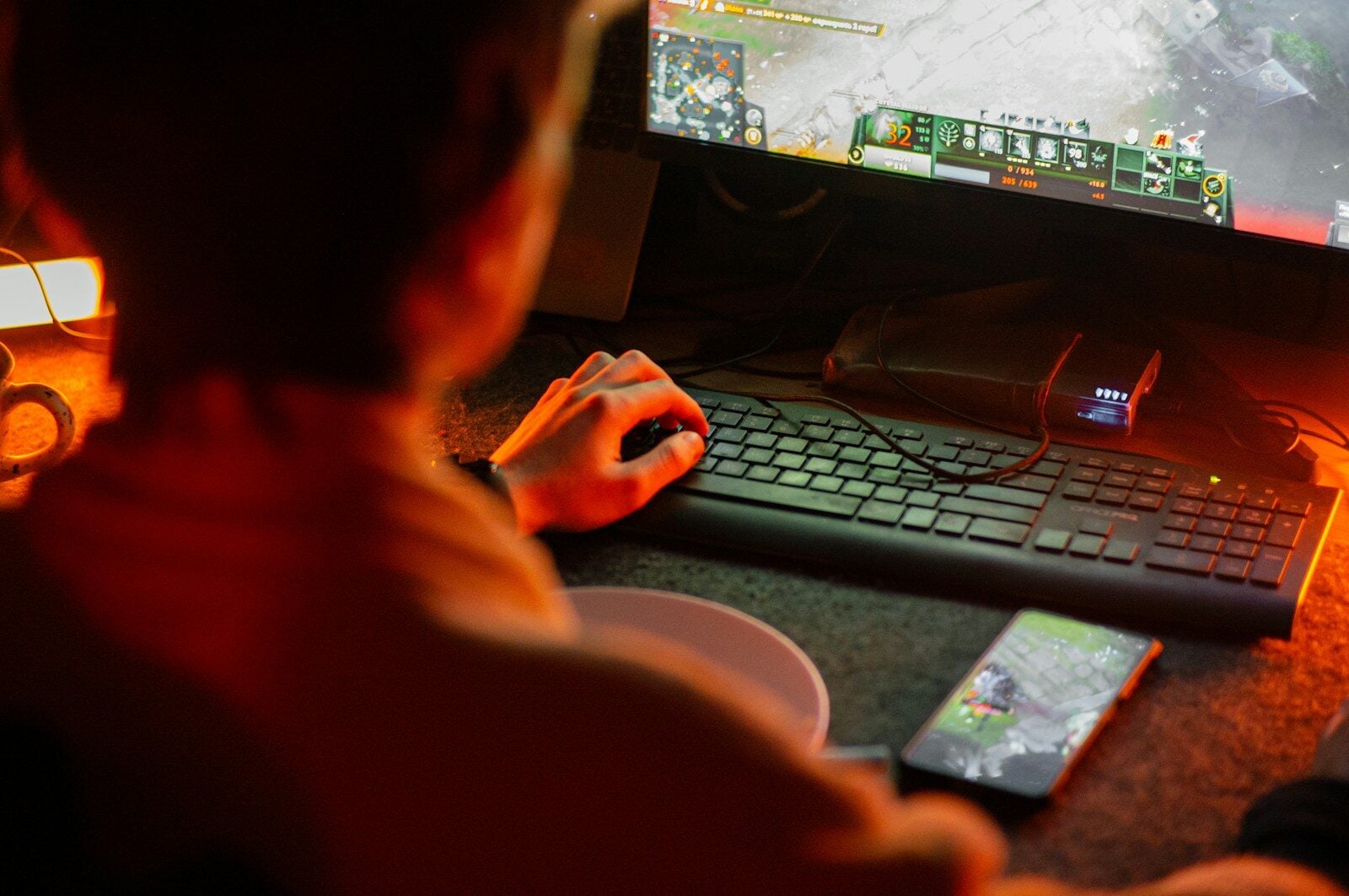
Educational PC video games offer a fun way to learn. These games mix play with learning, making it easier to pick up new skills. Kids and adults can enjoy them while gaining knowledge.
Many educational PC games teach science, math, and problem-solving. Some popular ones include Minecraft, which helps with creativity and building skills. Kerbal Space Program lets players learn about space flight. Factorio teaches resource management and planning.
Playing these games can boost critical thinking and motivation to learn. They often present challenges that require players to use their brains in new ways. This can make learning more exciting than traditional methods.
Educational PC Video Games: Enhancing Learning Through Interactive Play
Educational PC video games have evolved far beyond simple math drills and typing programs. Today’s learning games combine immersive storytelling, problem-solving, collaboration, and adaptive challenges to make education more engaging and effective.
This guide explores how educational PC games enhance learning, their benefits, best use cases, and how parents and educators can choose the right ones.
What Are Educational PC Video Games?
Educational PC video games are interactive digital experiences designed to teach specific skills or knowledge areas while maintaining the engagement and structure of traditional games.
They typically focus on:
- Academic subjects (math, science, reading, history)
- Cognitive skills (memory, logic, spatial reasoning)
- Social-emotional learning (empathy, persistence, collaboration)
- Technical skills (coding, engineering, digital literacy)
These games may be built specifically for education (“serious games”) or use gamification elements layered onto learning content.
Why Educational Games Work
1. Motivation Through Rewards
Digital educational games often use reward systems (points, levels, badges, unlockables) to increase student motivation.
Research shows that reward mechanisms stimulate intrinsic motivation and encourage active engagement in learning activities (source: PMC – The impact of digital educational games on student motivation).
By reinforcing progress and mastery, games align with behaviorist learning theory — rewarding correct responses and persistence.
2. Gamification Improves Learning Outcomes
Studies comparing serious games and gamification indicate that gamification often has a more positive impact on learning achievement and motivation (source: ScienceDirect – The Impact of Educational Games on Learning Outcomes).
Gamification elements include:
- Progress tracking
- Achievement systems
- Leaderboards
- Challenge progression
- Immediate feedback
These elements help maintain sustained engagement over time.
3. Enhanced Cognitive and Social Skills
Game-based learning supports both cognitive development and collaborative skills.
Research highlights that educational gaming promotes interaction, collaborative learning, and the development of cognitive and social abilities (source: ERIC – Engaging Students in the Learning Process with Game-Based Learning).
Students often:
- Solve complex problems
- Strategize
- Work in teams
- Reflect on outcomes
4. Social-Emotional Learning Benefits
Educational games also foster resilience, persistence, and emotional regulation.
According to Harvard’s Graduate School of Education, games can reinforce skills like persistence and working through frustration while strengthening social connections (source: Harvard GSE – Can video games help kids learn?).
This is especially valuable in:
- Project-based classrooms
- Hybrid learning environments
- After-school programs
Key Benefits of Educational PC Games
✅ Increased Engagement
Interactive gameplay keeps students focused longer than passive instruction.
✅ Immediate Feedback
Students see the consequences of their decisions instantly.
✅ Adaptive Learning
Many modern games adjust difficulty based on performance.
✅ Safe Failure Environment
Students can experiment and learn from mistakes without real-world consequences.
✅ Skill Transfer
Strategic thinking and persistence often transfer to academic tasks.
Popular Types of Educational PC Games
1. Math and Logic Games
- Algebra puzzles
- Physics-based simulations
- Logic grid challenges
2. Coding and STEM Games
- Block-based programming platforms
- Robotics simulators
- Engineering challenges
3. History and Civilization Simulations
- Strategy-based historical recreations
- Decision-based storytelling games
4. Language and Literacy Games
- Vocabulary adventures
- Reading comprehension quests
- ESL learning platforms
5. Sandbox Creativity Games
- World-building environments
- Open-ended design tools
How Teachers Can Integrate Educational Games
1. Align With Learning Objectives
Choose games that reinforce specific curriculum goals.
2. Set Clear Outcomes
Define what students should learn before gameplay begins.
3. Debrief After Play
Discussion solidifies learning. Ask:
- What strategies worked?
- What mistakes led to insight?
- How does this connect to real-world concepts?
4. Use Games as Supplements, Not Replacements
Games enhance instruction — they don’t replace strong teaching.
Choosing the Right Educational PC Game
When evaluating options, consider:
| Factor | Why It Matters |
|---|---|
| Age appropriateness | Matches cognitive development |
| Learning alignment | Supports curriculum standards |
| Engagement level | Maintains attention |
| Accessibility | Works on available hardware |
| Assessment tools | Tracks progress and outcomes |
Policymakers and institutions are increasingly encouraged to support development and research in educational gaming to expand access and effectiveness (source: Springer – Exploring the efficacy of computer games as a pedagogical tool).
Limitations to Consider
While educational PC games are powerful tools, they are not a cure-all.
Potential challenges include:
- Screen time concerns
- Over-reliance on extrinsic rewards
- Technical accessibility barriers
- Uneven quality across products
Careful selection and balanced use are key.
The Future of Educational PC Gaming
Emerging trends include:
- AI-driven adaptive learning
- Virtual and augmented reality classrooms
- Cross-platform collaborative worlds
- Data-driven performance analytics
Research suggests game-based learning will continue to grow as a key digital learning resource in higher education and academic environments (source: ResearchGate – Learning Through Game-Based Technology).
Final Thoughts
Educational PC video games transform learning from passive consumption into active participation. When thoughtfully selected and integrated, they:
- Increase motivation
- Improve learning outcomes
- Build cognitive and social skills
- Reinforce persistence and problem-solving
Interactive play isn’t just entertainment — it’s a powerful educational tool.
Key Takeaways
- Educational PC games make learning fun and engaging
- Popular games teach skills like science, math, and problem-solving
- These games can improve critical thinking and motivation to learn
Foundations of Educational PC Video Games
Educational PC video games blend learning and fun. They teach skills while keeping kids engaged. These games have changed a lot over time and now cover many subjects.
Historical Evolution and Impact
Early educational PC games appeared in the 1970s. The Oregon Trail was one of the first big hits. It taught kids about American history. Another popular game was Carmen Sandiego. It made learning geography fun.
These games showed that learning could be exciting. They paved the way for more advanced titles. As computers got better, so did the games. Graphics improved and gameplay became more complex.
By the 1990s, educational games were common in schools. They helped teach math, science, and reading. Many kids played them at home too.
Design Principles and Learning Objectives
Good educational games balance fun and learning. They have clear goals that match school subjects. The best ones make kids want to keep playing and learning.
Designers use several key ideas:
- Interactive elements
- Rewards for progress
- Gradual increase in difficulty
- Immediate feedback
These features keep kids interested. They also help them learn better. Games can teach problem-solving and critical thinking too.
Many games now use real-world situations. This helps kids see how their learning applies to life.
Genre Diversity and Educational Topics
Educational PC games now cover many topics. There are games for almost every school subject. Some focus on one area, while others mix subjects.
Popular genres include:
- Puzzle games for logic and math
- Simulation games for science and social studies
- Adventure games for reading and history
Space and nature are common themes. Kids can explore planets or learn about animals. Some games teach coding or music.
Minecraft: Education Edition lets kids build and learn at the same time. It’s used to teach many subjects. Roblox also has educational games made by its community.
Leading Educational Games and Their Applications
Educational PC games offer fun ways to learn about science, math, history, and creativity. These games teach important skills while keeping players engaged.
Science and Exploration
Kerbal Space Program lets players build and fly rockets. They learn about physics and space travel as they launch ships into orbit. Players must plan missions and manage resources carefully. The game teaches orbital mechanics and aerospace engineering concepts.
Universe Sandbox simulates space on a grand scale. Users can create and destroy planets, stars, and galaxies. It brings astronomy to life in an interactive way. Players see how gravity affects objects in space. They can also model cosmic events like supernovas.
Mathematics and Logic
Math Blaster makes practicing math skills exciting. Players solve equations to progress through space-themed levels. The game adjusts difficulty based on player performance. It covers topics from basic arithmetic to algebra.
Epistory – Typing Chronicles improves typing skills through an adventure story. Players type words to defeat monsters and solve puzzles. The game tracks typing speed and accuracy. It helps build a crucial skill for computer use.
Strategic Thinking and Social Studies
Civilization VI lets players guide a society from ancient times to the future. They must make choices about government, technology, and diplomacy. The game teaches concepts like resource management and long-term planning. Players learn about historical leaders and wonders.
The Oregon Trail puts players in charge of a wagon traveling west in 1848. They must manage supplies and make tough choices. The game teaches about 19th-century American history. Players learn about the challenges faced by settlers.
Creative Expression and Design
Minecraft: Education Edition brings the popular building game to classrooms. Students can create anything they imagine with digital blocks. The game teaches basic coding and design skills. Teachers can use it for lessons in many subjects.
Little Big Planet 3 encourages players to design their own game levels. They can create puzzles, obstacles, and stories. The game teaches logic and spatial reasoning. Players learn to think like game designers as they build and share levels.