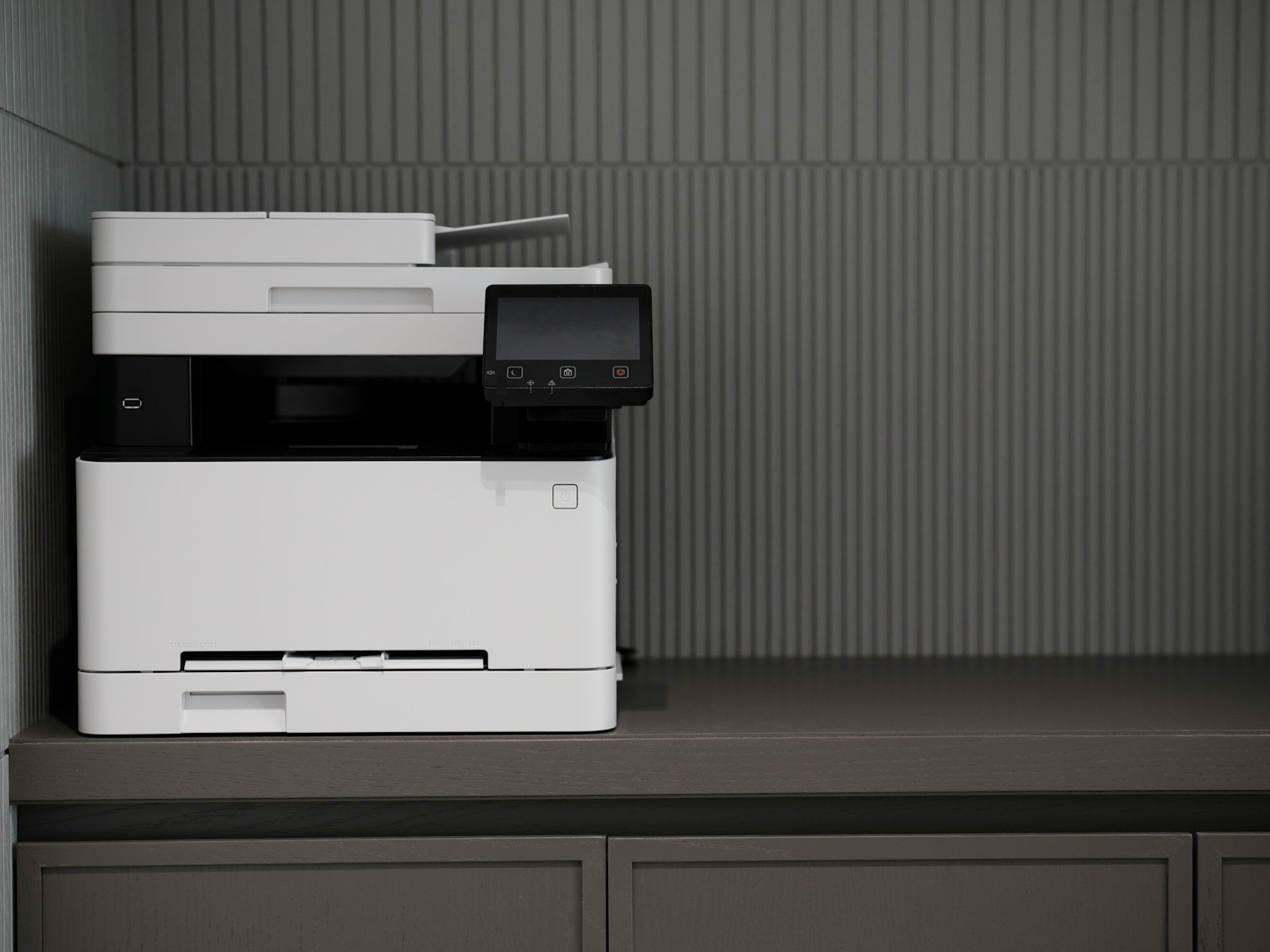
Color laser printers are fast, precise, and widely used in offices and homes, but the technology inside them can seem mysterious. Unlike inkjet printers, which spray liquid ink onto paper, color laser printers use light, static electricity, toner powder, and heat to produce sharp, durable prints. Here’s a clear, step-by-step look at how they work.
The Core Components
Before diving into the process, it helps to know the main parts involved:
- Laser unit – Projects an image onto a drum using a laser or LED array
- Photoconductor drum – A light-sensitive rotating cylinder
- Toner cartridges – Fine powder in four colors: cyan, magenta, yellow, and black (CMYK)
- Transfer belt – Moves toner from drums to paper
- Fuser unit – Uses heat and pressure to bond toner permanently to paper
Step-by-Step Printing Process
1. Image Processing
When you send a document to print, the printer’s processor converts the file into a raster image—essentially a map showing where each color of toner should go on the page.
2. Charging the Drum
Each photoconductor drum is given a uniform electrical charge. This prepares the drum to receive the image.
3. Laser Writing
A laser (or LED array) scans across the drum and selectively discharges areas according to the image data.
Where the laser hits, the electrical charge changes—this forms an invisible electrostatic image of the page.
4. Applying Toner (CMYK)
Each color toner cartridge applies toner to its corresponding drum:
- Cyan
- Magenta
- Yellow
- Black
The toner particles are electrically charged, so they stick only to the areas exposed by the laser.
5. Combining the Colors
There are two common methods:
- Single-pass printers: All four colors are layered onto a transfer belt in one pass, then transferred to paper at once.
- Multi-pass printers: Each color is applied sequentially, requiring multiple drum rotations.
Single-pass designs are faster and more common in modern printers.
6. Transferring Toner to Paper
The paper is given an opposite electrical charge and passes beneath the transfer belt or drums. This pulls the toner off the belt and onto the paper, forming the full-color image.
7. Fusing the Image
The paper then passes through the fuser unit, which uses:
- Heat (typically 180–200°C / 356–392°F)
- Pressure
This melts the toner powder and permanently bonds it to the paper fibers.
8. Cleaning and Resetting
After printing, any excess toner is cleaned off the drums, and they are recharged, ready for the next page.
Why Color Laser Printers Are So Sharp
Color laser printers excel at text and graphics because:
- Toner does not bleed like liquid ink
- Colors are layered precisely
- Prints are instantly dry and smudge-resistant
This makes them ideal for business documents, brochures, and high-volume printing.
Laser vs. Inkjet (Quick Comparison)
| Feature | Color Laser | Inkjet |
|---|---|---|
| Print speed | Fast | Slower |
| Cost per page | Lower (high volume) | Higher |
| Print durability | Very high | Moderate |
| Photo quality | Good | Excellent |
| Maintenance | Low | Higher (ink drying/clogging) |
In Summary
A color laser printer works by using lasers to draw an electrostatic image, toner powder to form color layers, and heat to fuse the image onto paper. The result is fast, reliable, and professional-quality printing that’s ideal for both office and home use.