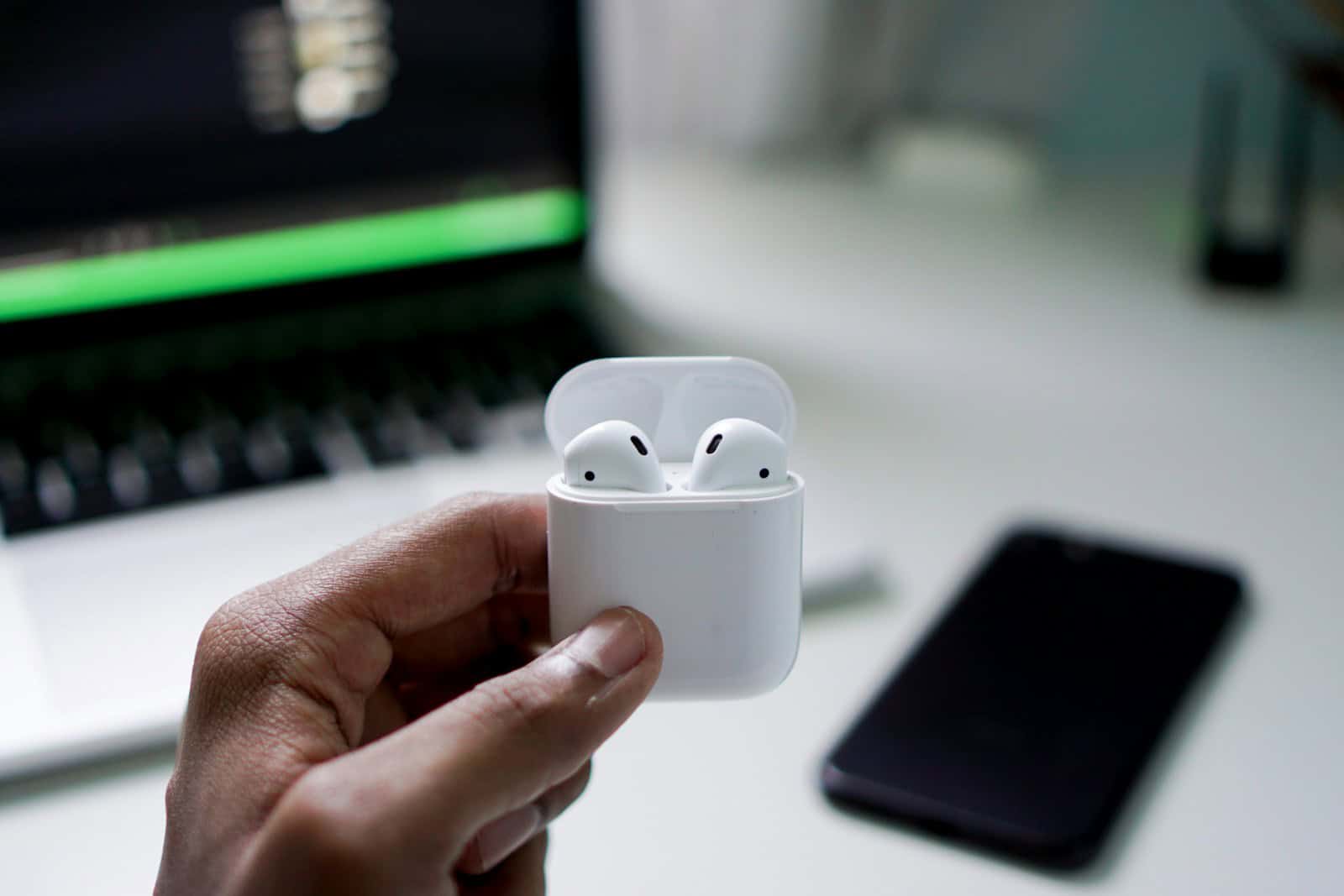
A factory reset is the quickest cure for pairing failures, distorted audio, or battery-drain mysteries— and it wipes any lingering ties to another Apple ID, protecting your privacy if you bought the earbuds second-hand or plan to sell them. Apple’s latest iOS 18 and macOS Sequoia updates even add a one-tap Audio Device Reset shortcut in Settings, but the classic button method still works on every model.
Updated Reset Instructions by Model
| Model | Reset Sequence | What the Status Light Does | Extra Tips |
|---|---|---|---|
| AirPods (1st–3rd gen) & AirPods Pro | 1) Make sure both buds and case are at least 50 % charged. 2) Close the lid for 30 s. 3) Open lid. 4) Press and hold the setup button on the back for ≈15 s until the light flashes amber, then white. | Amber → white confirms a full wipe. | After the reset, keep lid open for 30 min so the newest firmware can reload automatically. |
| AirPods 4 | 1) Charge to 50 %+. 2) Close lid 30 s. 3) Open lid. 4) Double-tap the case front three times—a new haptic sensor makes the buttonless design possible. | Light pulses white three times. | If tapping doesn’t register, remove any protective skin; capacitive sensors need direct contact. |
| AirPods Max | Charge the headset, then hold Digital Crown + Noise-Control button for ≈15 s until the LED on the right ear cup flashes amber, then white. | Amber → white. | Plugging in a USB-C cable during the reset prevents accidental power-offs. |
Pro Tips for a Smooth Reset
- Unpair and forget first. In Bluetooth settings, tap the ➜ next to your AirPods, choose Forget This Device, then confirm.
- Remove from Apple ID. Open Find My → Devices → AirPods → Remove This Device to break any hidden location link.
- Charge everything. Low batteries are the top cause of “reset failed” beeps—aim for at least half a charge in both buds and case.
- Fix mismatched firmware. If one bud refuses to reconnect after a reset, leave both buds in the open case near your iPhone for about an hour; they’ll usually sync firmware versions on their own.
- Recalibrate older cases. For erratic battery readings, do a full reset, play audio until everything is dead flat, then recharge to 100 %. This often restores accurate percentages.
Quick-Look Reset Checklist
| Step | Action |
|---|---|
| 1 | Charge buds and case to ≥50 % with a USB-C or Lightning cable |
| 2 | Forget AirPods in Bluetooth settings |
| 3 | Remove AirPods from Find My (if listed) |
| 4 | Perform the model-specific reset sequence until you see amber → white |
| 5 | Keep the lid open 30 min to allow firmware to reload |
| 6 | Re-pair AirPods and confirm firmware version in Settings › Bluetooth › ( i ) › About |
When to Call Apple Support
- One earbud still refuses to charge or reset
- AirPods Pro play a repetitive “three-beep” error even after a full wipe
- Firmware cannot update after multiple 30-minute attempts
- Condensation or liquid damage is suspected (AppleCare+ may offer discounted replacements)
A proper reset clears 90 % of AirPods woes. If problems persist, Apple Support can run remote diagnostics and arrange a case-only or earbud-only swap without replacing the entire set.
Why AirPods Won’t Connect to iPhone
Struggling to connect your AirPods to your iPhone can be frustrating, but there are simple solutions to try. The quickest fix often involves checking that Bluetooth is on and the AirPods are charged. Sometimes, a software update is needed. Putting the AirPods back in their case and then trying again can also help.
Another method is resetting the AirPods. Hold the button on the case for 15 seconds until the light flashes. Then try reconnecting. Rebooting the iPhone can also fix the connection issue. These steps are straightforward and usually solve the problem.
For persistent problems, contacting Apple Support can provide further help. They offer detailed troubleshooting and support to ensure your AirPods work properly.
There are several common reasons why your AirPods might not be connecting to your iPhone, and thankfully, most of them can be resolved with some simple troubleshooting steps. Here’s a breakdown of the most frequent culprits:
1. Bluetooth Issues:
- Bluetooth is off: The most basic reason. Make sure Bluetooth is enabled on your iPhone (Settings > Bluetooth).
- AirPods aren’t selected: Even if Bluetooth is on, your iPhone might be trying to connect to another audio device. Open Control Center on your iPhone and tap the AirPlay button (it looks like a triangle with concentric circles) to ensure your AirPods are selected.
- Interference: Other Bluetooth devices nearby could be causing interference. Try disabling other Bluetooth devices temporarily.
2. Battery Problems:
- Low battery: Your AirPods won’t connect if they don’t have enough charge. Place both AirPods in their charging case and make sure the case itself is charged. An amber light on the case usually indicates it’s charging or has low battery, while green means it’s fully charged.
3. Software Glitches:
- Outdated iOS: Your iPhone’s operating system might be outdated, leading to compatibility issues. Ensure your iPhone is running the latest version of iOS (Settings > General > Software Update).
- AirPods firmware: While you can’t manually update AirPods firmware, it usually updates automatically when connected to an updated iOS device. Keeping your iPhone updated helps ensure your AirPods also have the latest firmware.
4. Connection Problems:
- Temporary glitch: Sometimes, a simple restart of your AirPods or iPhone can resolve a temporary connection glitch.
- Restart AirPods: Put both AirPods in their case, close the lid for about 15-30 seconds, then open it again. For AirPods Max, hold the Digital Crown and noise control button until the light flashes amber (about 10 seconds).
- Restart iPhone: Power off your iPhone and turn it back on.
- AirPods need to be reset: If the connection issues persist, you might need to reset your AirPods. This essentially clears their connection history and allows you to pair them as if they were new.
- On your iPhone, go to Settings > Bluetooth, tap the “i” icon next to your AirPods, and select “Forget This Device.”
- With both AirPods in the case and the lid open, press and hold the setup button on the back of the case until the status light flashes white (for most models). For AirPods 4, double-tap the front of the case until the status light flashes white.
- Then, hold the open case near your iPhone and follow the on-screen prompts to reconnect.
5. Other Less Common Issues:
- Dirty AirPods/case: Dirt or debris in the charging case or on the AirPods themselves could prevent proper charging or connection. Clean them carefully.
- Hardware issue: In rare cases, there might be a hardware problem with your AirPods or iPhone. If you’ve tried all troubleshooting steps and still can’t connect, you might need to contact Apple Support for further assistance.
- Fake AirPods: While less common, if you purchased your AirPods from an unofficial source, there’s a slight chance they could be counterfeit and have trouble connecting.
By systematically going through these reasons and troubleshooting steps, you can often resolve most AirPods connectivity problems with your iPhone.
Key Takeaways
- Turn on Bluetooth and check AirPods’ charge.
- Reset AirPods by holding the case button for 15 seconds.
- Reboot iPhone and contact Apple Support if needed.
Troubleshooting AirPods Connection Problems
When AirPods fail to connect to an iPhone, several steps can help resolve the issue. Start with basic checks, and progress to more detailed troubleshooting.
Initial Steps for Connecting AirPods to iPhone
First, make sure Bluetooth is turned on in the iPhone’s settings or Control Center. Place the AirPods in their charging case and close the lid. Wait for around 15-30 seconds. Then open the lid and bring the AirPods close to the iPhone. The status light on the case should flash white, indicating pairing mode.
If the AirPods do not connect, try turning Bluetooth off and on again on the iPhone. Open Settings, tap Bluetooth, and flip the switch off. Wait about 30 seconds, then turn it back on. Check if the AirPods connect now.
Resolving Persistent Connectivity Issues
If the AirPods still won’t connect, reset them. Put both AirPods in the charging case and close the lid. After 15-30 seconds, open the lid and press and hold the setup button on the back of the case for about 15 seconds until the status light flashes amber and then white. On the iPhone, forget the AirPods from the Bluetooth settings by tapping the “i” icon next to them and selecting “Forget This Device.” Re-pair the AirPods with the iPhone.
Clean the AirPods and the charging case. Dirt or earwax can block sensors and interfere with connection. Use a dry, clean brush or cloth to remove any debris from the case and AirPods.
Updating Your Devices and AirPods Firmware
Keeping both the iPhone and AirPods firmware up to date ensures compatibility and fixes bugs. To update the iPhone, go to Settings > General > Software Update and install any updates available. For AirPods, connect them to the iPhone and make sure they are charging. Firmware updates install automatically when the AirPods are connected to an updated iPhone.
If issues persist, double-check the firmware version on the AirPods in the Bluetooth settings. Make sure the firmware is current, and repeat the steps to try reconnecting.
Assistance and Support Resources
If all else fails, contact Apple Support for further help. Visit an Apple Store for in-person assistance, where trained staff can diagnose and fix hardware issues. Check if the AirPods are still under warranty for potential replacements or repairs.
Apple’s online support site also offers helpful guides and troubleshooting tips. Searching for specific keywords related to AirPods connection problems can provide additional solutions and steps to resolve persistent issues.