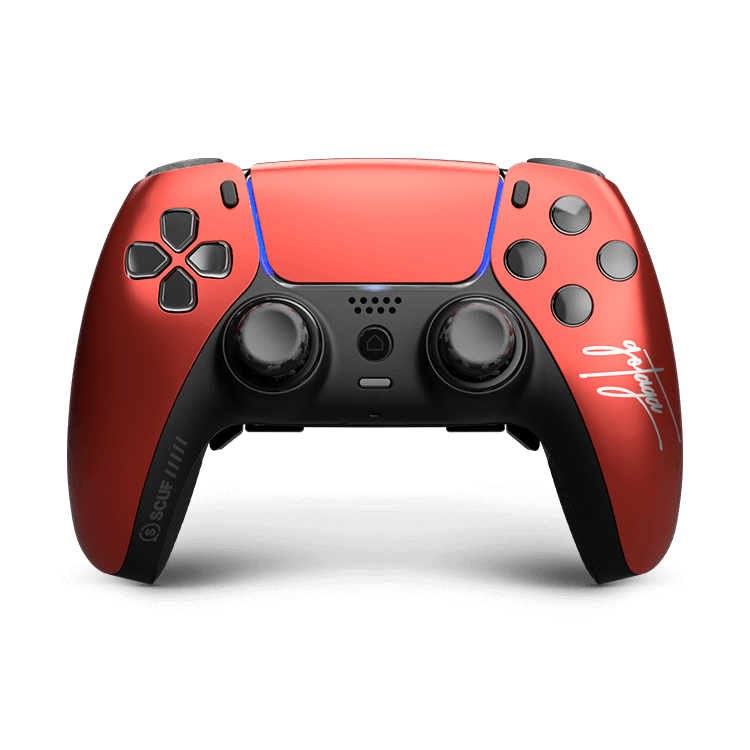
The gaming landscape for PS5 enthusiasts is rapidly evolving with the introduction of advanced controllers such as the Scuf Reflex and Sony’s DualSense Edge. These devices offer a more nuanced and customizable gaming experience, catering to the high demands of professional-level play. Each controller presents its own set of features, such as back buttons and trigger stops with the DualSense Edge, and paddles with a mouse click feel on the Scuf Reflex.
While both controllers aim to enhance the gaming experience on PS5, they do so with variations in design, functionality, and user customization. The DualSense Edge boasts software customization options that give players control over their gaming style. In contrast, the Scuf Reflex prioritizes rapid response with its instant triggers and bumpers, excluding the haptic feedback and adaptive triggers found in the original DualSense controller.
Sony’s DualSense Edge and Scuf’s Reflex lineup are the two main premium controller options for PS5 players. Both are designed for competitive gaming, but they take different approaches in features, customization, and value. Let’s break it down.
1. Design & Build Quality
- DualSense Edge
- Built directly by Sony, so it has the same ergonomics and feel as the standard DualSense.
- Premium matte finish, slightly heavier than the stock controller.
- Comes with a sturdy carrying case.
- Scuf Reflex
- Nearly identical in shape to the DualSense, but with Scuf’s signature grip textures and customizable faceplates.
- Available in multiple variants: Reflex, Reflex Pro, and Reflex FPS (each adding more premium features).
- Lighter than the Edge, which some FPS players prefer.
2. Back Buttons / Paddles
- DualSense Edge
- Two interchangeable back buttons (either paddles or half-dome style).
- Limited to 2, but highly responsive and easy to remap in software.
- Scuf Reflex
- Four back paddles, giving more flexibility for FPS and competitive play.
- Paddles are removable if you prefer fewer.
Winner: Scuf Reflex (if you want more paddles).
3. Triggers
- DualSense Edge
- Adjustable trigger stops with three levels.
- Can switch between full adaptive triggers (for immersion in PS5 games) and short hair-triggers (for shooters).
- Scuf Reflex
- Reflex FPS model has instant triggers (mouse-click feel) but removes adaptive triggers entirely.
- Regular Reflex/Pro keep adaptive triggers, but without adjustable stops.
Winner: Edge (for versatility), Reflex FPS (purely for shooters).
4. Customization
- DualSense Edge
- Deep software customization built into the PS5 UI (profiles, sensitivity curves, dead zones, remapping).
- Swappable stick caps (low dome, high dome).
- Replaceable stick modules (you can buy new ones for ~$20 instead of replacing the whole controller).
- Scuf Reflex
- Hardware customization at purchase: colors, faceplates, grip styles.
- Limited software options compared to Edge.
- No replaceable stick modules—stick drift requires repair or replacement.
Winner: Edge (for software & longevity), Reflex (for aesthetics).
5. Price
- DualSense Edge: ~$199.99 (includes case, cables, swappable stick caps).
- Scuf Reflex: $199.99–$249.99 depending on model (Reflex, Pro, or FPS).
Winner: Edge (better value for the same base price).
6. Best For…
- DualSense Edge
- Players who want a versatile controller that works well across all game genres.
- Gamers who value Sony’s first-party integration, software customization, and repairability.
- Scuf Reflex
- Competitive FPS players who want 4 paddles and instant triggers.
- Players who care about aesthetics and grip customization.
✅ Final Verdict
- Choose the DualSense Edge if you want the most balanced, future-proof option with Sony’s full support, replaceable sticks, and deep customization.
- Choose the Scuf Reflex FPS if you’re a hardcore shooter player who needs 4 paddles and instant triggers, and don’t mind paying more.
👉 In short: Edge = versatility & value. Reflex = FPS specialization.
Key Takeaways
- The Scuf Reflex and DualSense Edge are designed for enhanced PS5 gaming.
- They differ in customization options, with the DualSense Edge focusing on software settings.
- The Scuf Reflex caters to players valuing rapid response features over haptic feedback.
Comparative Analysis of Scuf Reflex and DualSense Edge
The Scuf Reflex and DualSense Edge controllers are popular among gamers who seek enhanced gaming experiences. Each has distinctive features and designs that cater to different player preferences.
Design and Build Quality
The Scuf Reflex features a sturdy design with customizable elements that appeal to users who value a personal touch. It has rubber grips that ensure the controller stays secure in a player’s hands. In contrast, the DualSense Edge maintains a design similar to the regular DualSense but with added premium materials that give it a more solid feel.
Feature Set and Customization Options
Customization is where both controllers truly stand out. The Scuf Reflex allows for the adjustment of trigger dead zones and comes with the option for instant triggers, ideal for first-person shooter games like Reflex FPS. In contrast, the DualSense Edge offers highly customizable sticks, four back buttons, and user-configurable profiles, adaptable to games like Gran Turismo 7.
Performance and Gaming Experience
Performance-wise, the Scuf Reflex with its hair-trigger feature and responsive paddles aims to minimize reaction times. The DualSense Edge, however, features adaptive triggers and haptic feedback that enhance immersion in games, making virtual worlds like Returnal feel more realistic.
Controller Ergonomics and Comfort
Ergonomics play a vital role in long gaming sessions. The Scuf controller’s back paddles are strategically placed for the middle and ring fingers, while the DualSense Edge’s button placement and touchpad are designed to keep gamer comfort in mind. Both manufacturers prioritize an ergonomic grip to reduce player fatigue.
Battery Life and Connectivity
Battery life is crucial for gamers. Both controllers connect via a USB-C cable and deliver a reliable gaming experience with minimal lag. The specific battery life can depend on the usage patterns and the chosen features like haptic feedback that might drain the battery faster.
Price and Value Proposition
When it comes to price, the Scuf Reflex is a premium product that offers multiple customization options. The DualSense Edge also comes at a premium, typically around $200. Gamers must weigh the cost against the added value each controller provides compared to the regular DualSense gamepad, which is less expensive.